
Skip to content
  • ACT Government logo
  • Home
  • Discrimination
  • Health Service
  • Disability
  • Human Rights
  • Victim Support
  • Advocacy
  • Children & Young People
  • Complaints
  • Resources
  • News & Events
  • About us
  • Contact us
  • (02) 6205 2222
  • Home
  • Discrimination
  • Health Service
  • Disability
  • Human Rights
  • Victim Support
  • Advocacy
  • Children & Young People
  • Complaints
  • Resources
  • News & Events
  • Home
  • News & Events
  • Translating rights into child and youth-friendly language
Translating rights into child and youth-friendly language

The ACT was the first jurisdiction in Australia to have its very own Human Rights Act, which came into force in 2004. Next year we will be marking its 20th anniversary.

Some of the language in the Act is complicated, which makes it difficult for many children and young people to understand. This year Human Rights Commissioner, Dr Helen Watchirs and Children and Young People Commissioner, Jodie Griffiths-Cook are partnering to produce some child and youth friendly resources that explain the rights within the Act in accessible language and formats.

To make sure these resources will be attractive to children and young people, Jodie and her team are currently visiting schools across the ACT to talk to students about human rights, where they go to get information, and what formats they prefer it in.

So far Jodie and her team have met with more than 160 students between the ages of 8 and 18.

“We are running hands on activities, that are designed to get students to explore their rights and which help us learn how different age groups talk about these concepts. We learn the words and phrases they use so we can explain rights in ways they will recognise,” Jodie explained
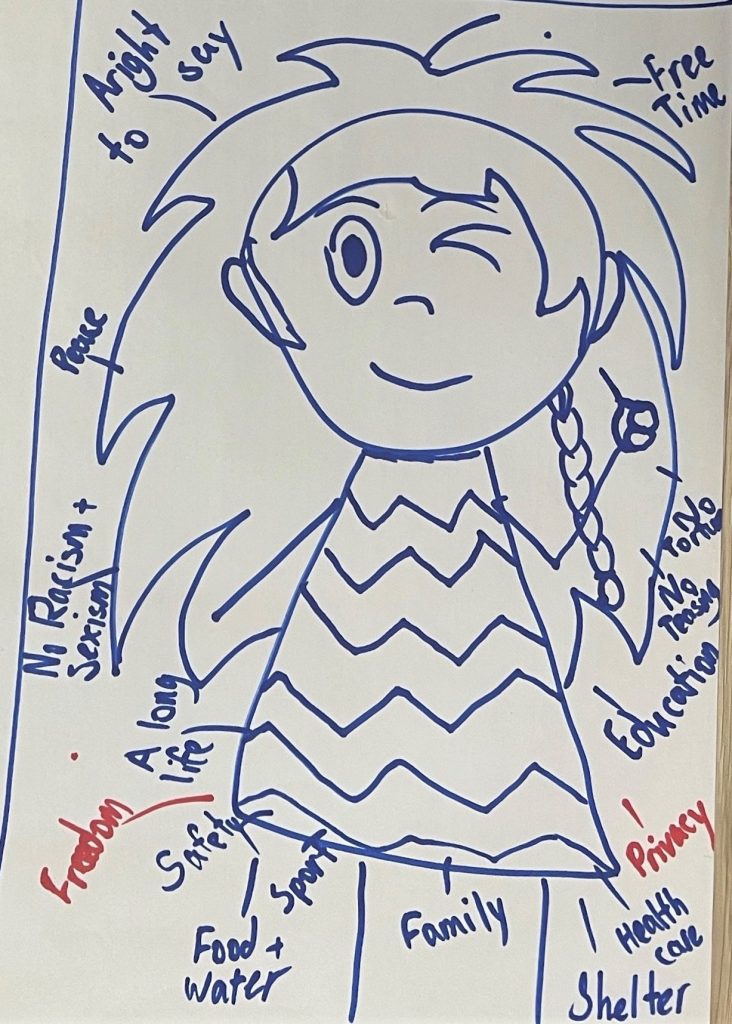
An illustration by a year 6 student.
An illustration by a year 6 student. During this session students were asked to brainstorm the rights they think children have.

“We have also been asking students where they go for information. The top two places they go came as a bit of a surprise.

“I was fully expecting online sources to be popular, and they are, but I was really happy to hear that adults in real life, at home or at school, are just as important to children and young people as sources of reliable information.

“So we know we need to provide online information about their rights, as well as make sure teachers and families have information to support them to talk to their kids about human rights too,” she said.

The consultation is ongoing, and the resources will be created over the next few months. If you would like more information, contact Jodie’s team at actkids@act.gov.au

Share article

Response to the Board of Inquiry’s final report into the ACT Criminal Justice System

We acknowledge the Board of Inquiry’s important work in facilitating public discourse about the criminal justice system.

Translating rights into child and youth-friendly language

Jodie and her team are currently visiting schools across the ACT to talk to students about human rights.

Commission welcomes pathway for human rights complaints

The Commission welcomes the introduction of legislation that provides for a new accessible complaints pathway about alleged breaches of human rights by public authorities in the ACT.

Specialised legal support for sexual assault victim-survivors welcomed

Victim Support Act and Women’s Legal Centre ACT have been selected to jointly run one of  three pilots across Australia, to provide a specialised and trauma-informed legal service for sexual assault victim-survivors.

View all news & events

Acknowledgement of Country

We acknowledge the traditional custodians of the ACT and recognise any other people or families with connection to the lands of the ACT and region. We acknowledge and respect their continuing culture and the contribution they make to the life of this city and this region.

ACT Child Safe Footer Logo
Child Safe Commitment Statement

HRC Child Safe Standards Statement of Commitment

We are committed to protecting and promoting the rights, safety, and wellbeing of children and young people. We are actively implementing the 10 Child Safe Standards in a way that is culturally safe and inclusive for all children and young people, including by respecting and valuing the diverse and unique identities and experiences of Aboriginal and Torres Strait Islander children and young people, and their families.


We take a zero-tolerance approach to child abuse, and will seek to ensure all employees, volunteers, contracted staff, and executives uphold their responsibilities.

Child Safe Logo with QR code
  • Feedback
  • Contact us
  • Jobs
  • Emergency Services
  • Accessibility
  • Privacy
  • Disclaimer
  • Copyright
  • CBR logo
  • Your Say logo
  • Access Canberra logo
  • ACT Government logo